7 Best Panama Canal Cruises for 2027: Routes Compared
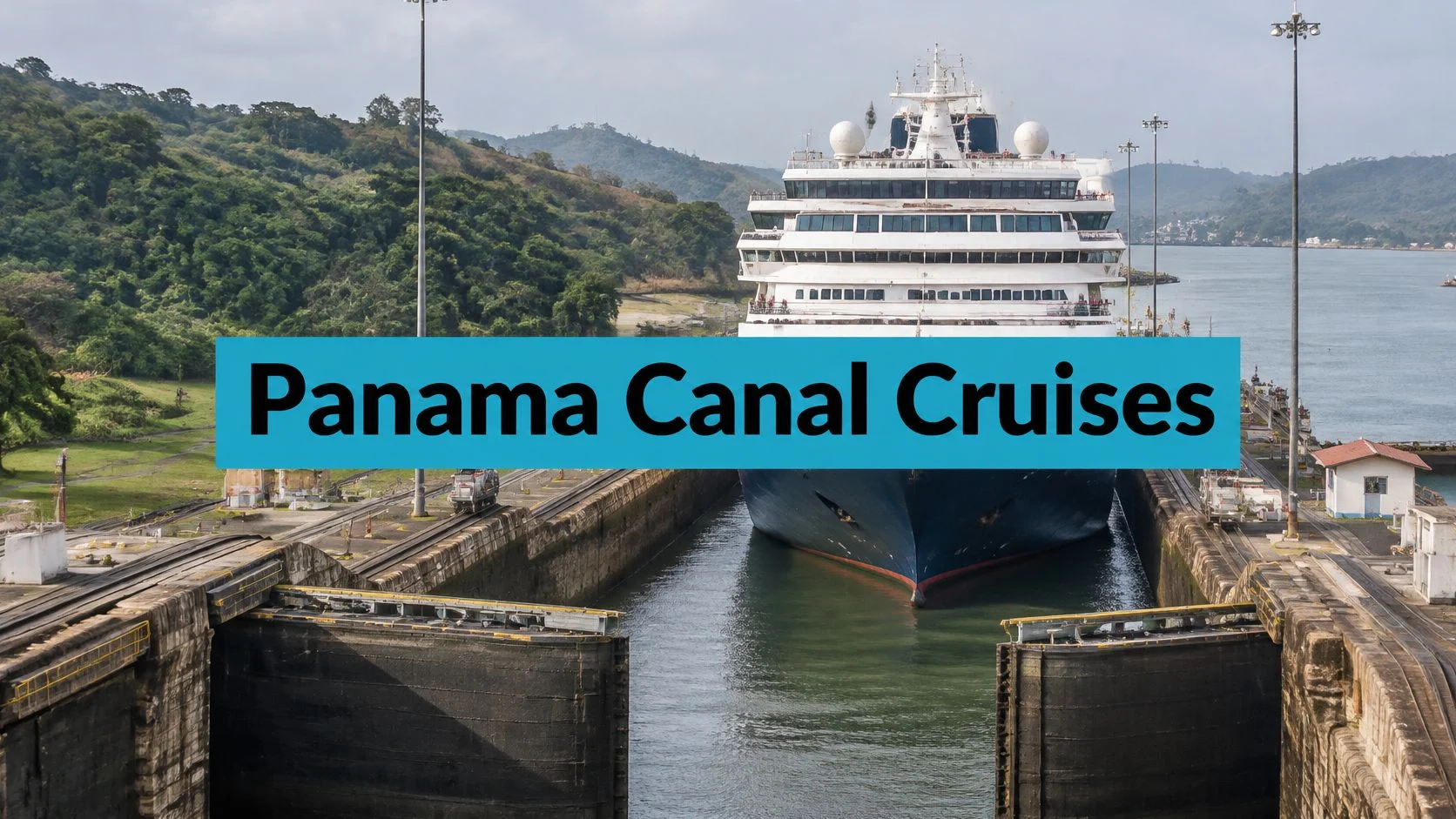
Not every Panama Canal cruise crosses the Panama Canal. Plenty of sailings sold under that name call at Colón, anchor in Gatún Lake, or run a shore excursion toPanama City, then turn around and sail back to Florida. You get the rainforest and a distant look at the locks, but you never make the ocean-to-ocean passage.
That distinction decides more about your trip than the ship's name on the brochure. A full transit puts you inside the locks for most of a day and drops you on the other side of the isthmus. A partial transit enters the Atlantic-side locks, reaches Gatún Lake, and returns the way it came. A port call gives you a few hours ashore and nothing more.
The seven options here are grouped by what they deliver: full crossings, round-trip partial transits, and small-ship regional itineraries. Departure city and trip length usually matter more than the vessel itself.
Table of Contents
- 1. Cruises.Aspx for Comparing Sailings Side by Side
- 2. Princess Cruises for the Canal-First Itinerary
- 3. Holland America Line for the Long, Slow Crossing
- 4. Celebrity Cruises for a Modern Ship on the Route
- 5. Norwegian Cruise Line for Range of Trip Lengths
- 6. Royal Caribbean for the Big-Ship Coast-to-Coast
- 7. Windstar Cruises for Small-Ship Access
- Panama Canal Cruise Options at a Glance
- Pick the Transit First, Then the Ship
1. Cruises.Aspx for Comparing Sailings Side by Side
Start with inventory, not with a favourite brand. Cruises.Aspx searches sailings from more than 40 cruise lines on one screen, which matters in this region because the same departure week can hold a 10-night Florida round trip and a 15-night coast-to-coast crossing.
The search screen is plain and it does the job.
Filter by destination, cruise line, ship, departure port, and date range, then stack up to six sailings side by side with rates, itineraries, and ship profiles in view at once. Setting the departure port first cuts the list fastest. If you can't reach Fort Lauderdale or Miami without a connection, say so in the search and stop scrolling past ships you'll never board.
Where the filters save the most time
- Set the port before the ship: The same vessel can sail a six-day-shorter itinerary depending on which coast it starts from.
- Compare six at a time: Rates, itineraries, and ship profiles sit next to each other, so a partial transit can't hide behind the words "Panama Canal" in a title.
- Book online or request a quote: You can complete the reservation yourself with immediate confirmation where the cruise line allows it, or ask for a quote and let a specialist work the search.
Supply isn't the bottleneck. The Panama Canal Authority expected more than 225 cruise-ship transits during the 2024-2025 season that opened in October 2024, spread across many lines. The work is narrowing, not finding. Our Western Caribbean cruise destinations page is worth a look if you're still deciding whether the canal or a straight island itinerary fits the vacation you have.
Your rate is locked once the deposit is paid. If you find a lower advertised price in U.S. dollars after booking but before final payment, we'll contact the cruise line to re-fare you to the better promotion.
2. Princess Cruises for the Canal-First Itinerary
The brochure is not the itinerary. Princess sells the canal as the reason for the trip, with live narration through the locks, scenic cruising on Gatún Lake, and sailings offered across several seasons that pair the crossing with Caribbean and Central American stops.
The line runs both formats, so the same brand can give you two different trips. Cruisebound's Panama Canal guide sets out the trade-off plainly: a partial itinerary typically enters the locks and reaches Gatún Lake before returning, while a full transit continues across the isthmus toward the Pacific.
The check that settles it: read the first port and the last port on the itinerary. The same city at both ends means you're on a partial transit, whatever the title says.
Round-trip sailings out of Florida make sense when one-way airfare at both ends is the thing stopping you. The cost is honesty about what you'll see. You'll watch the locks work, and you'll miss the second half of the passage.
Long one-way voyages add flights and a hotel night at each end, and passenger experience varies by ship, with at least one sailing drawing criticism over family activities. If you're travelling with children, I'd read recent reviews for that specific vessel rather than for the line.
3. Holland America Line for the Long, Slow Crossing
Holland America runs the longer version of this trip, generally around 12 to 21 days out of Vancouver, Seattle, San Diego, and Fort Lauderdale. Ports may include Huatulco and Cartagena, and an onboard Cruise & Travel Director works the history into the sea days.
Length is the point. Two to three weeks gives you time for the crossing and the ports on both sides of it, which a 10-night round trip can't offer.
The history earns the extra days. The waterway opened to commercial shipping on August 15, 1914, after more than a decade of construction, and annual traffic has generally reached about 13,000 to 14,000 ships, per a U.S. Census Bureau history feature. This is a working corridor you're passing through, not a theme park built for tourists.
If you're flying to the coast anyway, four extra days on the water usually cost less than a second trip later.
The drawbacks are time and money. Three weeks away is a real commitment, and a calmer, traditional onboard style won't suit anyone hunting high-energy entertainment every night. Reviews vary by ship and sailing, including some negative dining feedback, so check the specific vessel rather than the fleet reputation.
4. Celebrity Cruises for a Modern Ship on the Route
Celebrity works best when the ship matters as much as the crossing. The first filter is still transit type: some sailings are Florida round trips built around canal time, while longer one-way voyages continue between Atlantic and Pacific ports. That split changes the trip more than deck plans do.
Round trips keep air simple because you arrive and leave through the same gateway. One-way routes trade that convenience for a wider map, with Cartagena, Aruba, Curaçao, and Colón appearing across schedules. I'd pick the round trip for an easier vacation and the one-way only if the extra ports justify open-jaw flights.
Check the ship against the locks
Vessel dimensions screen candidates before ship style does. The Panama Canal Authority classes Panamax ships at roughly 294.13 m (965 ft) in length and 32.31 m (106 ft) beam, while Neopanamax vessels can reach 370.33 m (1,215 ft) and 51.25 m (168.14 ft), according to its vessel requirements document.
Record each candidate ship's length, beam, passenger capacity, and published route, then check those numbers against the authority's limits. A larger ship can be perfectly workable and still change the feel of transit day.
Two honest caveats. Canal sightseeing on a listing does not guarantee a full ocean-to-ocean transit, so confirm the routing before you commit. One-way sailings also need arrival and departure plans at two different airports, and cabin upgrades plus add-ons can push the fare well past the advertised number.
5. Norwegian Cruise Line for Range of Trip Lengths
Norwegian lists one of the widest spreads of Panama Canal sailings, from short Miami round trips to coast-to-coast voyages between California and Florida. Gatún Lake, Colón, and Cartagena recur across the routes, and the onboard entertainment and dining choices are among the broadest at sea.
The catch hides in the wording. A sailing that visits Gatún Lake or Colón hasn't crossed the isthmus, and Norwegian's own listings mix both kinds under one destination page.
Draft, water, and what can change
Draft rules are where itineraries get modified. The authority's published requirements cap Neopanamax draft at 15.24 m (50 ft) in tropical fresh water, and its customer notices have recorded changes to authorised draft levels, including a temporary adjustment to 14.32 m (47 ft), per the authority's draft and booking notices.
So compare three things before booking: the sailing date, the ship's draft, and the line's stated policy for partial or modified transits. Ask directly whether passengers stay aboard for the lake portion or transfer to a smaller vessel.
Booking rule: never book a nonrefundable post-cruise flight for the same day you leave the ship.
Free at Sea style promotions muddy the total-cost comparison, because the add-ons change what you'd otherwise pay for. Passenger reviews are mixed, with complaints about food variety and onboard operations, so weight recent ones heavily.
6. Royal Caribbean for the Big-Ship Coast-to-Coast
Royal Caribbean's canal lineup is thin, and most of it is one-way sailing between Florida and California, with Cartagena, Costa Rica, Guatemala, and Mexico among the possible calls.
That one-way shape is the point. A Florida-to-California sailing crosses the isthmus end to end rather than looping back to the same coast. If you want megaship venues and the crossing in a single trip, this is the shortlist, and a short one. Sailing dates and starting fares appear in search results, which gives you a rough baseline before you call anyone.
What the 2016 expansion changed
The newer locks are why ships this size can run the route at all. The expanded waterway opened on June 26, 2016, when COSCO Shipping Panama made the inaugural transit through the new Agua Clara and Cocolí Locks, an event the Panama Canal Authority documents. The expansion added a second lane of traffic, with locks built wider and deeper than the originals.
When you're weighing a megaship crossing against an older, smaller vessel, the lock lane matters. The newer one handles the width; the original locks give you the tighter, more photogenic squeeze.
The limits are real. Choice is confined to certain ships and dates, one-way routing means transport planning at both ends, and preferred sailings fill early. Book the cabin category you want rather than assuming it will still be there next month.
7. Windstar Cruises for Small-Ship Access
Windstar runs yacht-style sailings built around Panama, Costa Rica, and the coast between them, with daylight canal transits on select routes. Some itineraries pair the cruise with land extensions in Costa Rica or to Machu Picchu.
Less ship, more shoreline. You trade waterslides and production shows for a smaller vessel and, on some routes, stops the big ships can't make.
Why the schedule can move
Transit timing isn't the captain's call alone. The canal authority says scheduling depends on vessel type and size, draft, canal conditions, available resources, daylight requirements, and traffic in the navigation channels, as set out on its customer information page. Shore excursions can shift with it, since operators confirm final timing close to the operation.
Daylight transit is exactly what small-ship travellers want here, and it's also the first thing a busy canal day can push.
The drawbacks are real. Fewer departure dates and routes mean less flexibility on your calendar. Some sailings are partial transits or regional Panama and Costa Rica loops rather than full ocean-to-ocean passages, so read the port list. And if you like casinos, big theatres, and multiple specialty restaurants, a yacht-style ship will feel quiet.
Panama Canal Cruise Options at a Glance
Two sailings can share a cruise line, a ship, and a price and still be different products. The Transit Type column is where that shows up: "full" means you cross ocean to ocean, while a partial transit or a Colón port call means you don't.
| Item | Typical Trip Length | Transit Type | Departure Ports | Best For |
|---|---|---|---|---|
| Cruises.Aspx | Roughly 10 nights to 21 days, depending on what you filter | Comparison tool; searches full, partial, and port-call sailings | Searches Fort Lauderdale, Miami, Tampa, San Diego, Vancouver, Seattle and more | Comparing cruise lines, itineraries, and fares |
| Princess Cruises | About 10-11 nights round trip; longer on one-way full transits | Full or partial transit | Fort Lauderdale round trips; one-way between Florida and California ports | Canal-focused trips with narration and scenic cruising |
| Holland America Line | About 12-21 days | Panama Canal voyages | Vancouver, Seattle, San Diego, or Fort Lauderdale | Longer, traditional-style cruises |
| Celebrity Cruises | About 11 nights to longer voyages | Round-trip or one-way; transit type varies | Fort Lauderdale or Tampa | Contemporary ships and flexible itinerary options |
| Norwegian Cruise Line | Shorter round trips to longer voyages | Round-trip or one-way; full transit varies | Miami or California and Florida ports | A wide range of trip lengths and onboard activities |
| Royal Caribbean | About 15 nights | One-way coast-to-coast | Tampa or San Diego | Large-ship venues and one-way canal voyages |
| Windstar Cruises | Typically around a week on regional routes | Small-ship; daylight or partial transits on select routes | Panama and Costa Rica | Regional exploration and a yacht-style experience |
The first row is a search tool rather than a sailing, so use it to line up the available options underneath it. Once you've shortlisted, confirm the transit column against the actual port list, since the same line can run both a full crossing and a Gatun Lake turnaround in the same season.
Pick the Transit First, Then the Ship
Work the decision in order and you'll save yourself a rebooking.
First, decide whether a full ocean-to-ocean transit matters. If it does, the port list must show different cities at each end and the sailing has to continue across the isthmus. If a partial transit or a Colón port call fits your budget and calendar, take it and stop apologising for it. You'll still see the locks work.
Second, set trip length and departure city. Twelve to 21 days opens up the longer routes and more ports. A 10 or 11-night Florida round trip keeps flights simple. Moving the departure port can change the price of the whole trip more than the cabin category does.
Third, compare ships and onboard style. Big-ship amenities, traditional service, contemporary design, or yacht-style quiet. That's a preference question, and it comes last because it's the easiest to change.
Confirm whether the sailing is one-way. A one-way transit means two airports, two sets of transfer plans, and possibly a hotel night before and after, which changes the true cost far more than an upgrade does.
Before you commit, request a free quote and talk to a cruise expert at 1-888-604-0279. Ask what happens if the canal schedule shifts, whether the transit is guaranteed or conditional, and what the deposit locks in. Then read the cancellation terms properly. Once you're inside the final payment period, penalties are strict and they aren't waived, including for medical reasons.
Best Cruise Rates gives you one place to search sailings across more than 40 cruise lines, stack up to six options side by side, and see real rates and itineraries before you commit a deposit. For a canal trip, that means you can compare a full transit out of Fort Lauderdale against a partial round trip and a small-ship Costa Rica route in the same sitting. Visit Best Cruise Rates to start the search, or call and let a specialist check the routing with you.
Ready to book your next cruise?
Compare 40+ cruise lines or call our specialists at 1-888-604-0279.