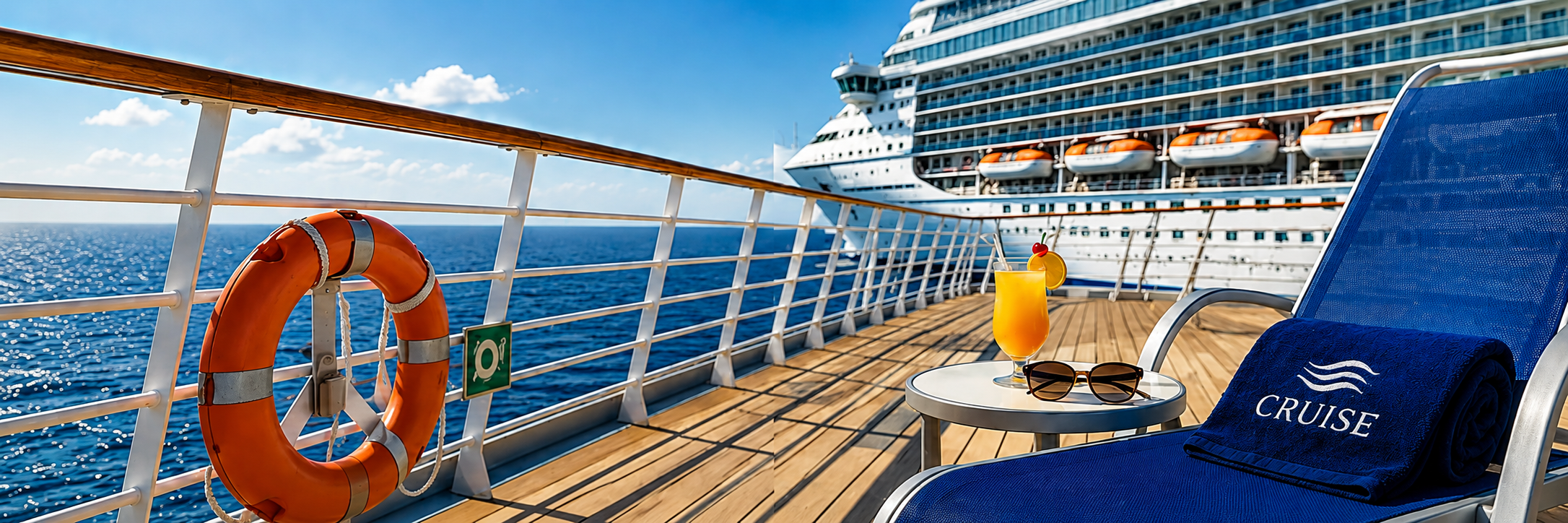
Planning your cruise should be exciting and stress-free. Below are answers to many common questions about the cruise experience, including what to expect before departure, embarkation day procedures, onboard life, required travel documentation, and the importance of travel protection.
Whether you are a first-time cruiser or a seasoned traveler, this guide will help you prepare for a smooth and enjoyable vacation.
Please note that cruise line policies, procedures, itineraries, and FAQ information are subject to change at any time without notice. We strongly recommend reviewing your cruise line’s official cruise contract, booking confirmation, and travel documents/tickets carefully prior to departure for the most up-to-date information and terms of travel.
If you still have questions then please free to contact us — our cruise specialists are always happy to assist you.
First and foremost, dress for comfort. Daily life aboard ship and in ports of call is laid-back and casual. You are encouraged to wear whatever makes you feel most comfortable: sportswear, shorts, slacks, sundresses and so on. Warmer temperatures call for clothing made of lightweight, breathable fabrics. For cooler temperatures we suggest casual clothes that can be layered easily. On some days you may need a raincoat and waterproof hat or umbrella. Gloves are a good idea as well. Footwear should include comfortable walking shoes for visits ashore and sandals or rubber-soled shoes for strolling on deck.
In the evening the dress codes varies according to the ship that you are sailing on. Most ships now offer a variety of restaurants to choose from and the dress codes for those restaurants will vary from casual to smart casual to formal. The suggested dress code in the ships' main dining rooms is generally sport shirts and slacks for men and sundresses or pants for women although some guests prefer to dress up for the occasion and are welcome to do so. In specialty restaurants and on the luxury cruise ships, jackets and ties for men are suggested for men and cocktail dresses or a nice pantsuit outfit would be appropriate for women. Tuxedos are no longer the norm for formal nights as even on the most formal of ships, a dark suit and tie are fine for the dressiest occasions. Tuxedos are usually available for rental if preferred. Again, these are guidelines and your evening attire is left up to your discretion.
Generally, you will be allowed to board two or three hours before the ship sails. Keep in mind that you must be on the ship at least one hour before departure, and the gangway will be pulled thirty minutes before sailing.
Upon completion of check-in, you will receive a guest identification card. This card will serve as your identification on-board and will be used as your payment method for all onboard charges. In addition, it will also serve as your identification for security procedures when embarking and disembarking the ship and when making purchases on board.
As you walk up the gangway, a member of the cruise staff will welcome you aboard. Your luggage will be delivered to your cabin shortly after it arrives at the ship. You will only have your hand luggage while boarding so be sure to keep important articles such as medicines, cameras, diapers and other necessary items in your carry-on luggage. It's also a good idea to pack your bathing suit in your carry-on luggage so that you can enjoy the pool area while waiting for your luggage to be delivered. Once you are on board you are free to explore the ship. Refreshments are available during embarkation and most cruise lines offer a nice buffet lunch (depending on the departure time).
Virtually every cruise ship (except for some smaller vessels operating in coastal waters) has a fully-equipped medical facility and staff to handle almost any emergency.
Your prescription medication should be kept close at hand in your purse or carry-on bag rather than in your checked luggage. Be sure to bring a sufficient supply of medication and transport it in the original container. It is also a good idea to carry a written list of your medications in case they are lost. The list should include the name of the drug, dosage, and times taken.
Please note that charges are usually incurred for services provided by onboard medical personnel. This is another reason why the purchase of travel insurance is very strongly sugg
Shore excursions can be booked in advance directly through your cruise line and are a great way to enhance your time in port. These guided experiences offer convenient transportation, professional tour services, and carefully planned activities designed to help you make the most of every destination.
Excursions range from relaxing sightseeing and cultural walking tours to exciting adventures such as zip-lining, snorkeling, helicopter tours, and customized private experiences. Availability may vary by sailing and destination, so early booking is recommended.
AIR TRAVEL
All U.S. citizens including children must present a passport or other approved travel document when entering the United States by air. U.S. citizens can present a passport, NEXUS card at airports with NEXUS kiosks, U.S. military ID with travel orders, or a U.S. Merchant Mariner Document when on official business.
CRUISE TRAVEL
U.S. citizens returning home from Canada, Mexico, the Caribbean or Bermuda, by land or sea, will be required to present one of the travel documents listed below.
Note: Cruise Ship Passengers: U.S. citizens on closed-loop cruises (cruises that begin and end at the same U.S. port) will be able to enter or depart the country with a birth certificate and government-issued photo ID. Please be aware that you may still be required to present a passport to enter the countries your cruise ship is visiting. Check with your cruise line to ensure you have the appropriate documents.
U.S. and Canadian citizen children under age 16 arriving by land or sea from contiguous territory may also present an original or copy of his or her birth certificate, a Consular Report of Birth Abroad, a Naturalization Certificate, or a Canadian Citizenship Card.
U.S. and Canadian citizen children under age 19 arriving by land or sea from contiguous territory and traveling with a school group, religious group, social or cultural organization, or sports team, may also present an original or copy of his or her birth certificate, a Consular Report of Birth Abroad, a Naturalization Certificate, or a Canadian Citizenship Card.
The group should be prepared to present a letter on organizational letterhead with the following information:
These rules, requirements and regulations became effective on June 1, 2009 and replace all previous requirements. Cruise.com is not liable for any fees or penalties if passengers are denied boarding for failure to provide adequate documentation of citizenship.
OUR RECOMMENDATION
Cruise.com strongly recommends that all guests travel with a valid passport during their cruise. This greatly assists guests who may need to fly out of the United States to meet their ship at the next available port should they miss their scheduled embarkation in a U.S. port; guests entering the U.S. at the end of their cruise; and guests needing to fly to the U.S. before their cruise ends, because of medical, family, personal or business emergencies, missing a ship's departure from a port of call, involuntary disembarkation from a ship due to misconduct, or other reasons.
Guests who need to fly to the United States before their cruise ends will likely experience significant delays and complications related to booking airline tickets and entering the United States if they do not have a valid U.S. passport with them.
All Non-U.S. citizens: Any non-US citizen who has previously been admitted to the United States for permanent residence must carry their passport and Alien Registration Receipt Card. All other non-U.S./non-Canadian citizens must have valid passports and any necessary visas. Such guests should verify carefully the existing identification requirements for their particular travel situation, as these requirements may change.
IMPORTANT: ALL guests should carefully verify the existing identification requirements for their particular travel situation DIRECTLY WITH THE CRUISE LINE OR THEIR LOCAL CONSULATES OR EMBASSIES, as these requirements may change. Guests arriving for embarkation without proper documentation may be denied boarding and will not be entitled to a refund.

