Cruise Ship Private Islands: What to Expect Ashore
If a cruise island is labeled private, does that mean the beach is yours and the town nearby gets your spending? For cruise ship private islands, the label usually means something narrower. One cruise company controls the sand, the food, the rules, and most of the tills. The day can still be crowded, and a lot of the money never reaches an independent shop.
Table of Contents
- What a Cruise Line Private Island Really Is
- Private Islands Compared at a Glance
- How a Private Island Visit Works Step by Step
- What Is Included and What Costs Extra
- Crowds and Capacity on Your Sailing Day
- Local Benefits and Environmental Trade-offs
- Choose Your Island Sailing Before You Book
What a Cruise Line Private Island Really Is
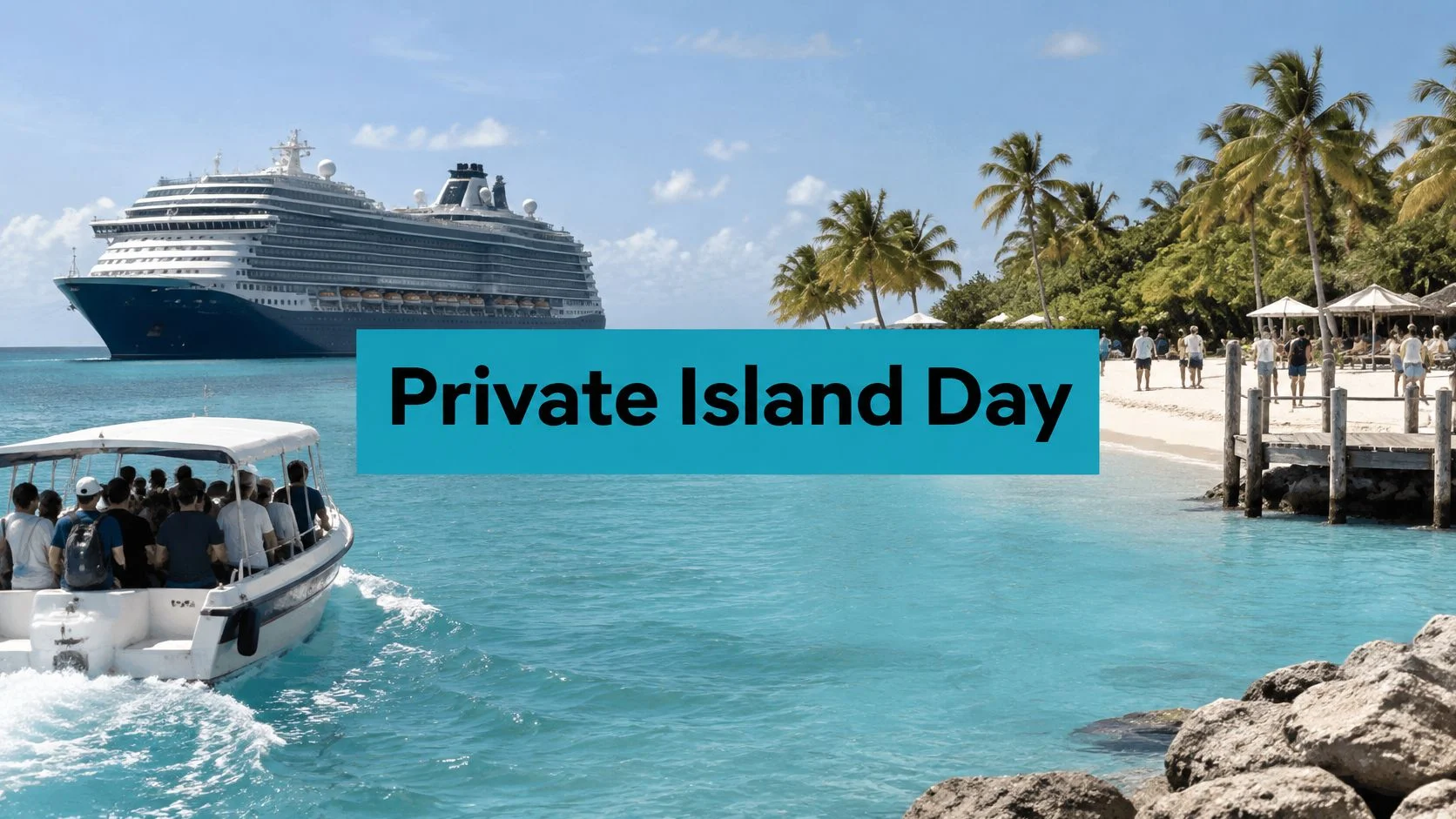
You step off the ship onto sand, palm shade, and a row of grills, and it can feel as if the pool deck grew a beach. That feeling is the design. A cruise line private island is a beach-and-resort stop owned or leased by one cruise company and built so guests stay inside a setting that company runs. Meals, entertainment, staff schedules, and house rules sit with the same operator that runs your cabin.
Where the model took hold
The Bahamas became the hub. Disney's Castaway Cay, Norwegian Cruise Line's Great Stirrup Cay, Royal Caribbean's CocoCay, Princess Cruises' Princess Cays, and Holland America Line's Half Moon Cay all work as dedicated destinations there. In figures cited in the country's 2025/26 budget discussion and reported by Seatrade Cruise, cruise passengers generated approximately 9.4 million arrivals to The Bahamas in 2023, equal to 83.4% of total tourist arrivals. One Bahamian political source in that account reported that cruise passengers spent less than $75 per person on average, while stopover visitors spent about 28 times more.
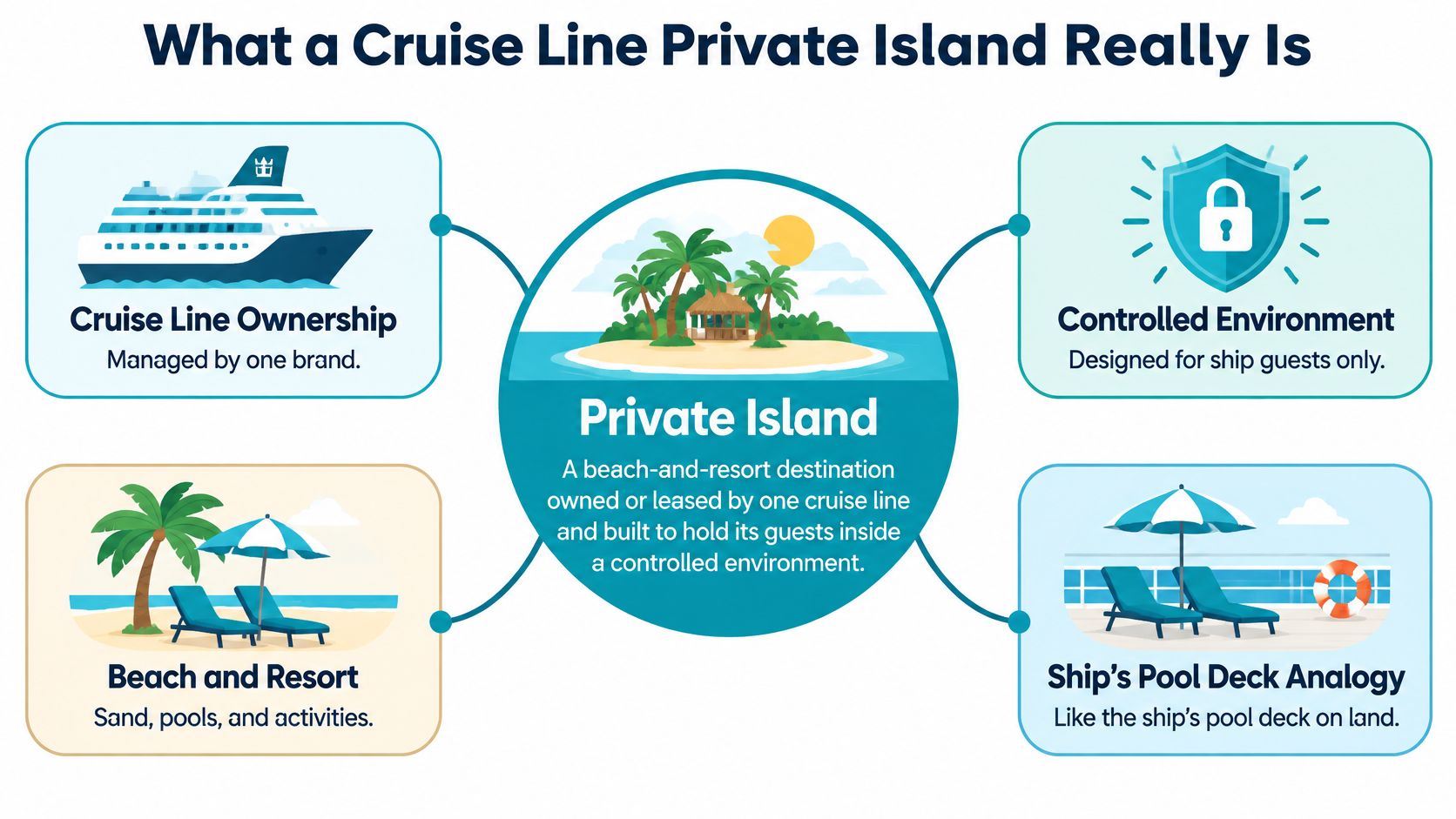
Beaches, food, excursions, cabanas, and shops are supplied or managed by the cruise company. A burger, a cabana, or a snorkel trip can be pleasant and still never reach an independent business in Nassau or another town. That is why officials and local businesses have pushed back on the model. Older cruise days were a walk into a working port. Once lines built full beach resorts, they took tighter hold of the guest day and of the revenue that moves from ship to shore.
What private does not mean
Private means cruise-line controlled, not empty and not reserved for your ship alone. Other ships from the same brand can be alongside, so the beach can be busy. You arrive by dock or by tender, depending on the island and the ship. Carry one picture forward. The island is an extension of the ship, reached by gangway or small boat and run by the company that runs your cabin.
Private Islands Compared at a Glance
Scan by cruise line first. Every island below is run by a single brand, most sit in The Bahamas, and Celebration Key is on Grand Bahama. The comparison here is brand against brand: the name in the second column tells you which company sets the schedule, staffs the beach, and collects what you spend ashore.
| Island | Cruise line | Location | Notable features or milestones |
|---|---|---|---|
| Castaway Cay | Disney Cruise Line | The Bahamas | Long-running Disney destination for family beaches and water play |
| Great Stirrup Cay | Norwegian Cruise Line | The Bahamas | Beaches and the Great Tides waterpark area |
| CocoCay (Perfect Day) | Royal Caribbean | The Bahamas | Large water attractions, cabanas and adults-only Hideaway Beach added in 2024 |
| Princess Cays | Princess Cruises | The Bahamas | Beach-focused stop rather than a full waterpark resort |
| Half Moon Cay | Holland America Line | The Bahamas | Beach-focused stop built around a quieter shore day |
| Ocean Cay MSC Marine Reserve | MSC Cruises | The Bahamas | Marine reserve branding with a conservation focus |
| Celebration Key | Carnival Cruise Line | Grand Bahama | Carnival's resort-style stop built around the Suncastle waterslides |
The rows that change the day
Castaway Cay is the long-running family beach. If you are sailing with young children, water play and a familiar Disney setting matter more than a record-size park. Disney also calls at Lookout Cay at Lighthouse Point, a second Bahamian stop you can plan for the same way. Great Stirrup Cay is Norwegian's beach island, with the Great Tides waterpark area layered onto a classic shore day. You can still do nothing but swim. The park is the add-on, not the whole island.
CocoCay is the heavyweight in this set. Recurve Capital reports that Royal Caribbean expected about 3 million visitors in 2024 after opening Hideaway Beach, an adults-only area, following about 2.5 million visitors in 2023. The same industry reporting found private-island visitation grew 41% between July 2023 and July 2024, against 18% growth for non-private Caribbean destinations. Absolute volume was still smaller, roughly 10 million travelers to private islands in the cited year versus about 57 million cruise passengers at other Caribbean destinations. High volume explains why the biggest attractions here work like a theme park day, with timed demand and paid zones, rather than an empty stretch of sand.
Princess Cays and Half Moon Cay stay closer to a beach day than a theme park. Ocean Cay is the conservation-branded stop. Celebration Key is Carnival's newer Grand Bahama resort, built around big water features rather than a quiet cove.
Find your cruise line in the table, then check that the island is on your itinerary. The same island can sit on a three-night Bahamas run and a longer western route. If you are weighing those public-port days too, line them up against western Caribbean cruise destinations before you lock the sailing.
How a Private Island Visit Works Step by Step
The island day runs on the ship's clock, not on island time. Miss the window and the best water or the last boat is gone.
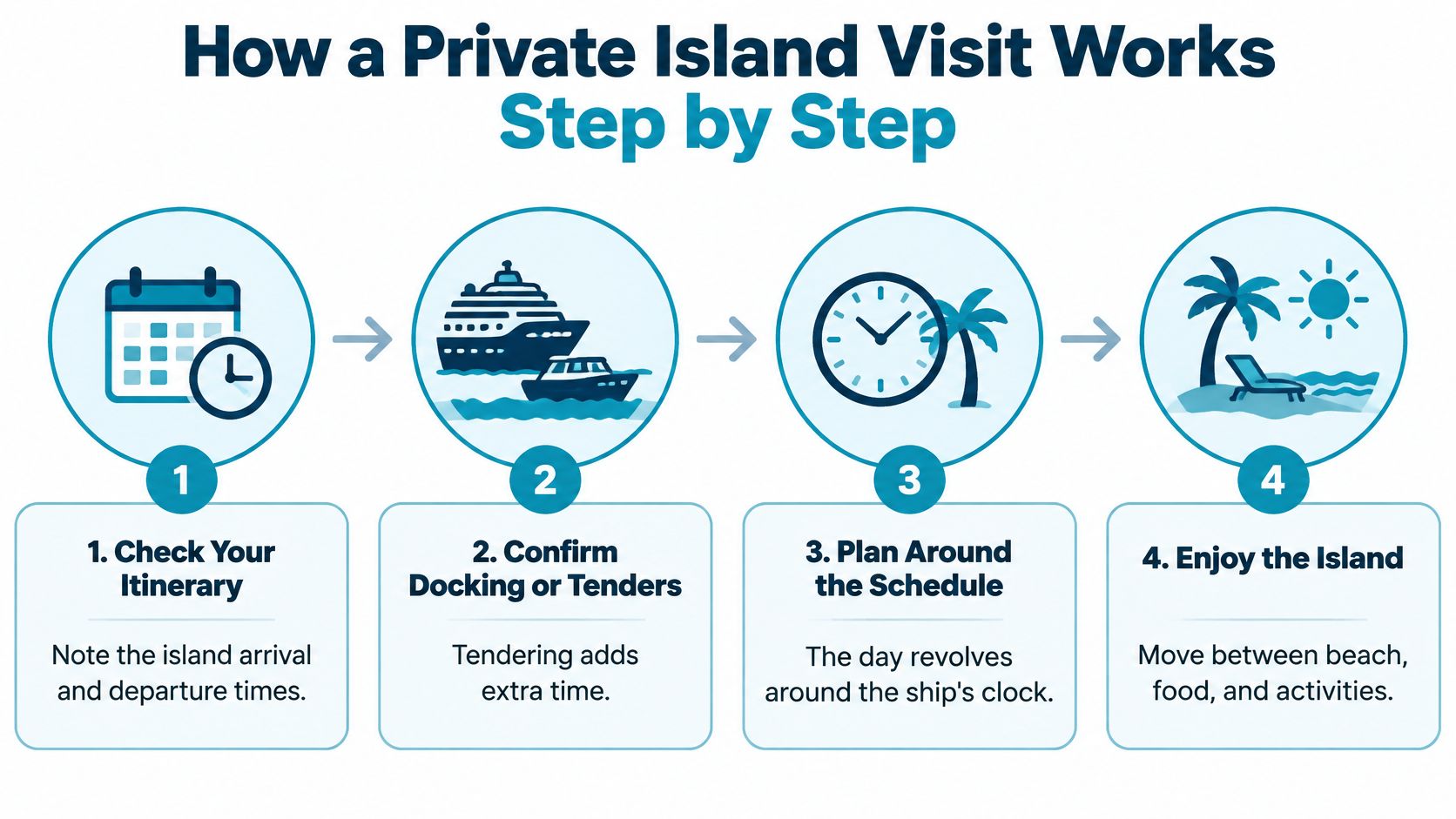
- Check the island on your itinerary. Write down arrival and all-ashore timing before you pack a bag. Every reservation, meal, and walk back has to fit inside that window.
- Find out whether you dock or tender. A pier lets you walk off. Tendering means you queue for a small boat, and that queue stretches when two groups want the first seats.
- Read the daily planner. It holds the island schedule, the all-aboard time, and any reservation windows for parks, clubs, or cabanas. If a pass is limited, the planner is where you see it, not a sign on the beach.
- Pack for water, not for a city walk. Bring reef-safe sunscreen, a dry bag for your phone and cards, and a little cash or a card for paid zones. A dry bag matters on a slide day because there is rarely a dry pocket once you are in the queue. A ship towel is often enough. Confirm that on your line so you are not hauling a wet one back.
- Go ashore with your ship card. You show it to leave and you need it to return. Keep it on you, not in a cabin safe.
- Pick one or two must-do areas. A water park or a quieter beach zone is enough for a day ashore. Check whether that zone needs a reservation or a paid pass before you trek across the island.
- Head back well before all-aboard. Last tenders fill fast, and the ship will not hold the sailing for a late lounge chair. Give yourself a buffer if you are on the far side of the island.
A relaxed visit looks ordinary on purpose. Start on the beach while the chairs are still open, take a shaded break when the sun is highest, and walk back early enough that the return feels boring. Boring is the goal. You are not racing a port schedule across a city. You are back on board with time to rinse off.
If you want a feel for how these shore days are laid out before you sail, this walk-through is a useful preview.
What Is Included and What Costs Extra
The budget question is simple. What is already in the fare, and what shows up on the ship account after a fun afternoon? Inclusions differ by island and by sailing, so treat the table as a checklist and confirm the details in your own booking.
| Category | Usually included | Often extra | Confirm before sailing |
|---|---|---|---|
| Beach access | Main beach areas on most islands | Reserved cabanas or loungers | Whether beach zones need a reservation |
| Water attractions | Some general areas | Premium passes or specific water-park zones | Which attractions carry an extra charge |
| Food | Basic buffet or grill options | Specialty dining and premium meals | Which food areas sit inside your package |
| Drinks | Water and soft drinks where offered | Alcohol and specialty drinks | Whether your drink package covers island bars |
| Shore excursions | Self-guided time on open beaches | Paid guided tours and activities | Whether any tour is part of your booking |
| Wi-Fi | Only the reach of your existing ship plan | Paid access | Whether your ship plan covers island connectivity |
Where the bill actually grows
Many main beaches and basic grills are included. Cabanas, premium water-park access, specialty dining, alcohol, and guided excursions often are not. Celebration Key shows why popularity matters as much as the price list. PAX News reports that Carnival said more than 49,000 guests used the Suncastle waterslides after the 2025 opening. A popular slide set fills. If you care about it, check reservations before you are standing in the sun.
Practical rule: List the three things you most want, price them in the cruise line's app, and decide whether a paid pass beats a free beach day.
Prices move, so the app or the booking page beats any old screenshot. Drinks you buy ashore are usually posted to your ship account. Check the running total before dinner so a round of cocktails does not surprise you at the end of the cruise. A drink package sometimes covers island bars and sometimes stops at the gangway. That single yes or no changes the day's cost more than a souvenir.
Plan the paid items before you sail. On arrival, lines are longer and inventory is thinner. If you are still choosing the sailing itself, start with how to get the best cruise deals so the fare and the island extras are judged together.
Crowds and Capacity on Your Sailing Day
Private islands are not automatically uncrowded. The useful comparison is the venue's daily capacity against the ship tied up offshore.
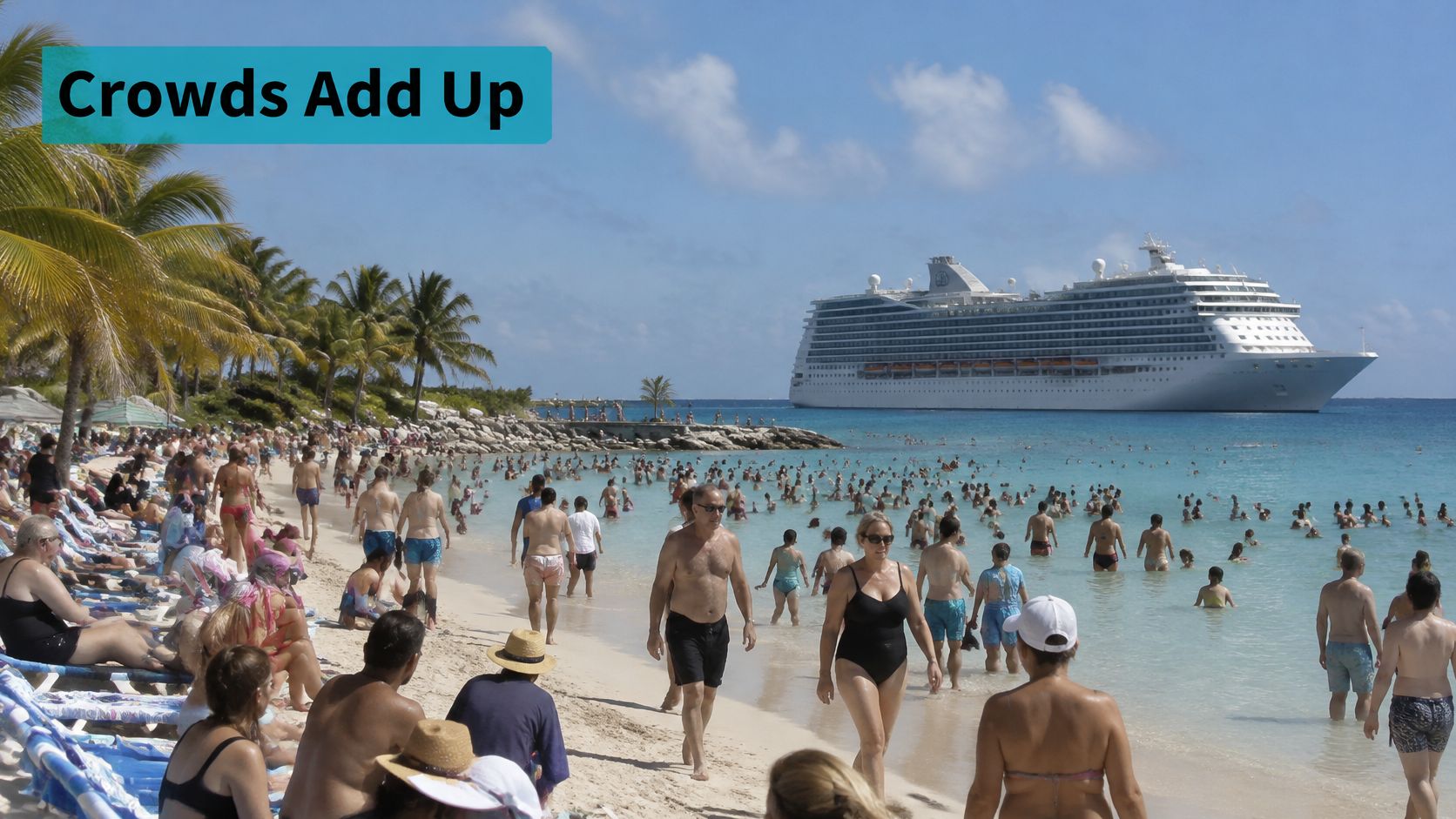
SFGATE reports that Royal Caribbean's Beach Club on Paradise Island can accommodate about 4,000 people daily, while ships serving it can hold roughly 6,000 passengers. The venue is still expected to receive more than 1 million visitors a year. A ship larger than the club cannot put every guest in that space at once. People spread onto other beaches, or they wait.
The same reporting says Carnival's Celebration Key welcomed about 2.5 million guests within roughly its first year, and that Carnival has expanded other destinations to handle larger ships or multiple calls. Two ships on one morning change the day more than the word private ever will.
Questions that predict your beach
- How big is your ship? A 2,000-guest ship and a 6,000-guest ship do not feel the same on one shoreline.
- What time do you arrive? The first hour after the gangway opens is when chairs and calm water are easiest to find.
- Is another ship calling? Simultaneous calls stack lines at food, tenders, and paid zones.
- What needs a reservation? Pools, cabanas, and beach clubs often do, even when the main sand is open.
Tactics that work are ordinary. Take the first tender or the first dock slot. Use water areas before the lunch rush. Book a reserved spot if you want a guaranteed midday shade break. Walk farther from the pier if you want fewer people. The closest sand fills first.
Private destinations can ease pressure on busy public ports and still pack thousands of guests into one controlled venue.
Ask how crowded your exact sailing will be. The label will not answer that.
Local Benefits and Environmental Trade-offs
Company job claims and a traveler's receipt are not the same thing. Keep them apart.
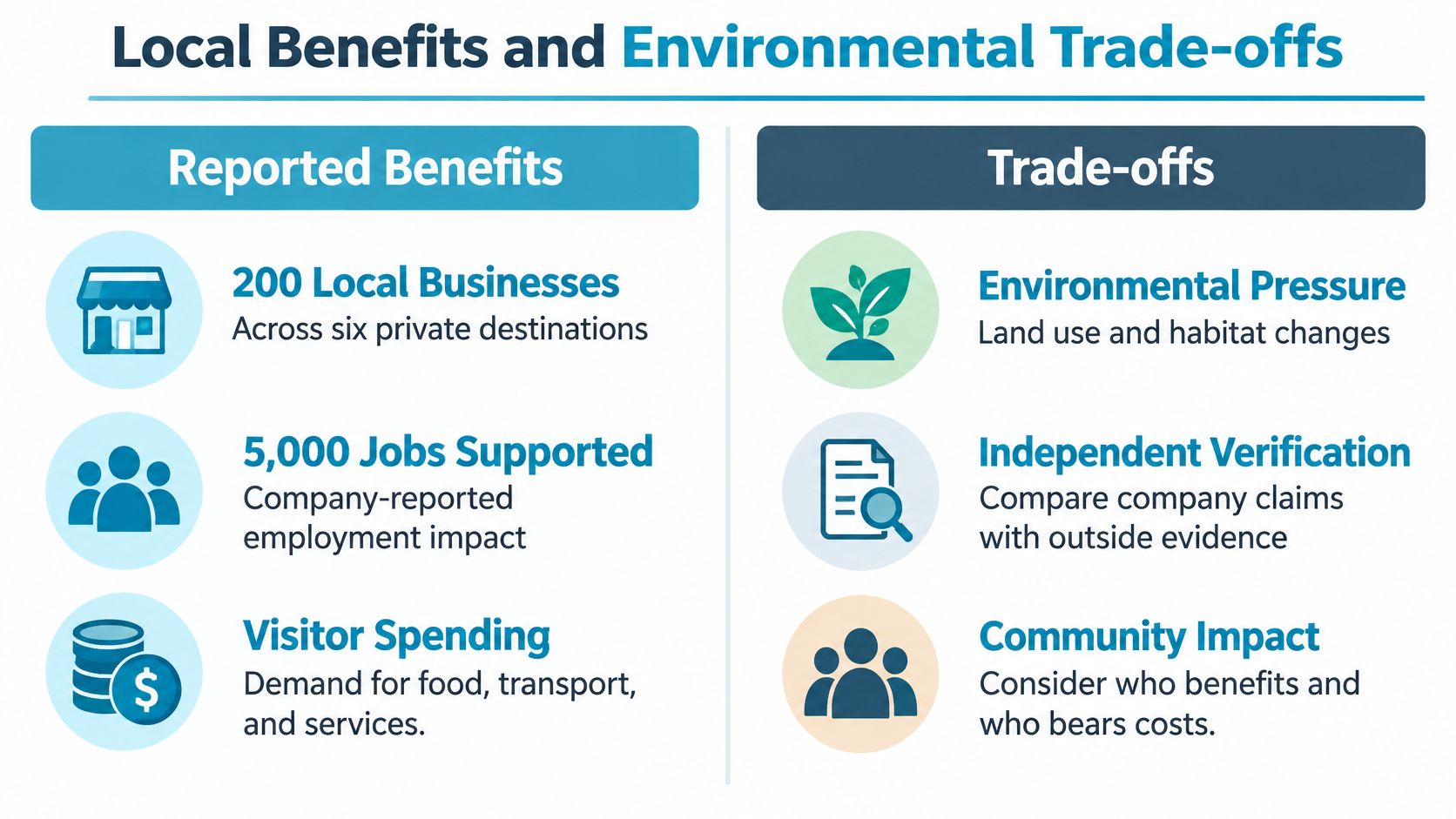
Carnival says approximately 200 local businesses operate across six private destinations and that the destinations provide about 5,000 local jobs, as noted by TravelPulse. That piece also describes local pushback in Mexico over the number of visitors expected at Royal Caribbean's planned Perfect Day destination. Separately, Caribbean Journal reports that Carnival said Celebration Key supported more than 1,000 permanent local jobs and partnered with 58 Bahamian-owned companies after opening in 2025. Those are company-reported benefits. They are not an independent audit of wages, contracts, or who keeps the margin.
Who holds the till
Passengers often buy food, drinks, and excursions inside the cruise ecosystem. Staff can be local and the till can still belong to the line. That split is the sore point for businesses outside the gate. A job on the island is a real benefit. It does not, by itself, mean a nearby town sees the same spending it would from a stopover guest who sleeps, dines, and shops there for several days.
What the shoreline has to absorb
Land conversion, freshwater demand, waste, marine habitat, and restricted public access are the trade-offs to weigh. One infrastructure example is wastewater. Royal Caribbean's 2019 sustainability report says Perfect Day at CocoCay uses a dedicated treatment plant described as twice as stringent as U.S. federal discharge requirements, plus reverse-osmosis drinking water, with treated water reused for landscaping and water-park irrigation. That is a company description. Ask whether capacity matches a full ship day, not a quiet Tuesday.
Marketing sometimes frames these islands as a way to spare crowded public ports. Shifting guests behind a controlled gate can also move the impact away from public view. Residents may not be able to walk onto the beach the way they could a town waterfront.
Before you treat a visit as local support, ask four plain questions.
- Who runs the excursion? An independent operator and a cruise concession are different businesses.
- Where does the money go? A local employee and a cruise-owned till can both be true.
- What is the environmental load? Water, waste, and habitat change do not show up on a beach photo.
- Who can use the island? Guests with a ship card are not the same as the host community.
Choose Your Island Sailing Before You Book
Compare sailings to the same island on the same dates, not only the cheapest cabin. Arrival time, ship size, and how many cabanas are still for sale change the day more than a balcony upgrade does.
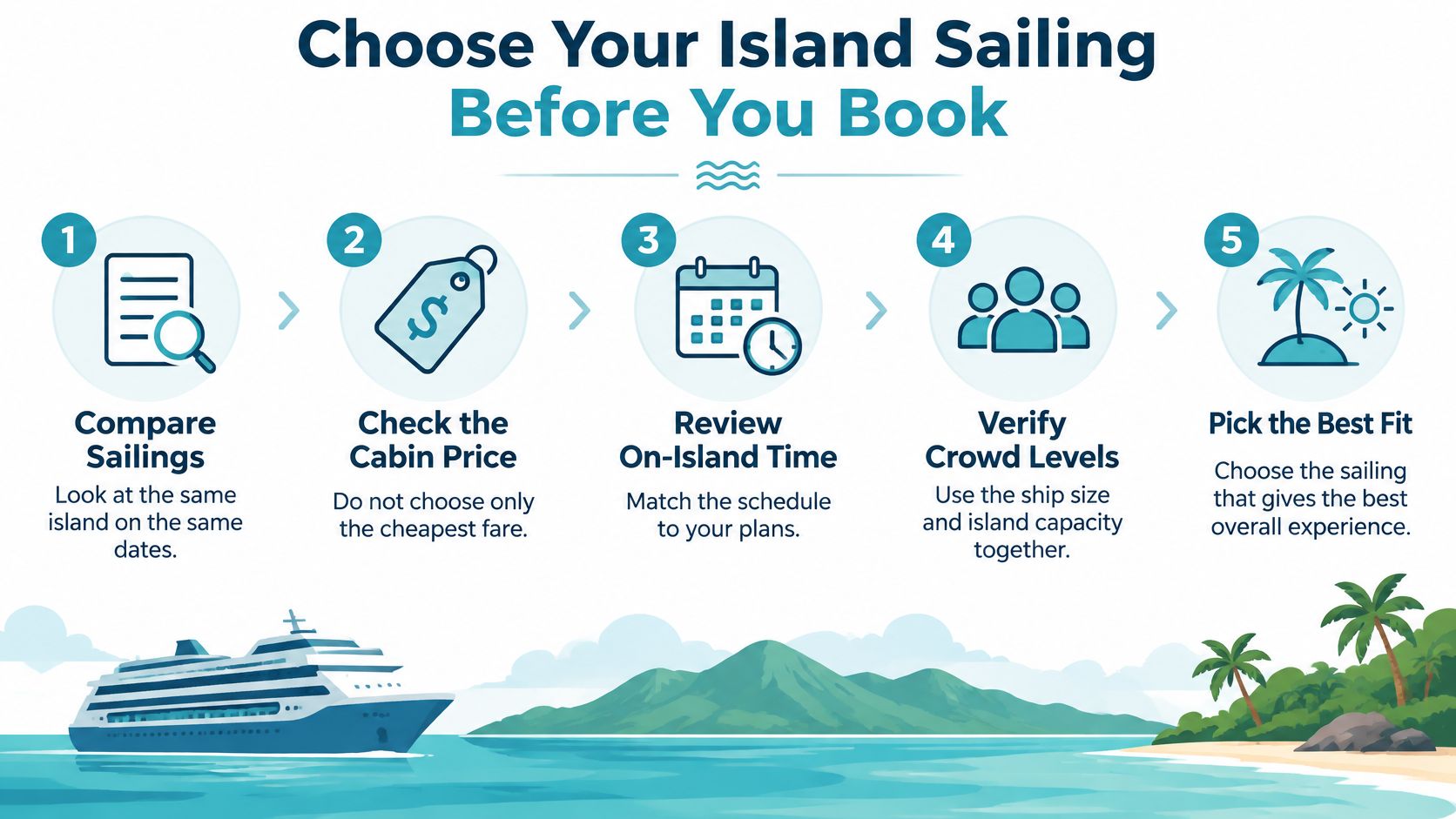
Match the island to the group. Families with young children often do better with Castaway Cay's family beaches. A group that wants slides will lean toward CocoCay or Celebration Key. Someone who wants a lighter beach day should hunt a smaller ship or a date that is not a double call, using the capacity questions and the paid-item list you already built.
Then do three things in order.
- List three must-do activities. If the list is only "swim," you do not need a park pass.
- Pick the line that calls there on your dates. A favorite island on the wrong week is a different vacation.
- Confirm included and paid items in writing before final payment. Screenshots from a forum are not your invoice.
Our platform offers access to more than 40 cruise lines, and cruise specialists help before, during, and after you book. If you want that comparison done with you, ask for a free cruise quote rather than guessing from the lowest fare alone. You can also start by seeing where to book a cruise and line up the island, the ship, and the hours ashore on one screen.
Best Cruise Rates compares itineraries that call at cruise ship private islands and gives you a free cruise quote when you get in touch. Specialists stay with you before, during, and after booking so the island, the ship size, and the hours ashore match the trip you want. Visit Best Cruise Rates when you are ready to set those sailings side by side.
Ready to book your next cruise?
Compare 40+ cruise lines or call our specialists at 1-888-604-0279.